Technology and innovation
Cars have changed more in the last fifteen years than in the previous fifty. What used to be a purely mechanical machine is now a rolling computer, connected to the internet, packed with sensors, and increasingly powered by electricity instead of gasoline. For many drivers, this shift feels exciting and overwhelming at the same time. This page explains the major technologies transforming the automobile today, how they work in plain language, and what they actually mean for you behind the wheel.
Whether you are shopping for your next vehicle, trying to make sense of a new car’s dashboard, or simply curious about where the industry is heading, the sections below break things down one concept at a time.
Why Automotive Technology Is Evolving So Fast
Three forces are driving the current wave of innovation. First, environmental regulation is pushing cleaner powertrains, which is why electric vehicles have moved from niche products to mainstream showrooms across the United States, Europe, and Asia. Second, consumer expectations have changed: drivers now expect their cars to behave like the smartphones they use every day, with touchscreens, apps, and over-the-air updates. Third, semiconductor and sensor costs have dropped dramatically, making features that were luxury options a decade ago affordable on entry-level trims.
Think of it this way: a camera that cost thousands of dollars in an early research vehicle can now be bought for the price of a nice dinner. That economic shift is what allowed parking cameras, blind-spot monitoring, and lane-keeping systems to spread so quickly.
Electric Powertrains: The Biggest Shift in a Century
The internal combustion engine dominated the automobile for over a hundred years. Electric vehicles (EVs) are changing that. Instead of burning fuel in a complex engine with hundreds of moving parts, an EV uses a large battery, an electric motor, and power electronics. The result is a drivetrain with far fewer components, instant torque, and zero tailpipe emissions.
How an EV Actually Works
- The battery pack, usually mounted under the floor, stores electrical energy.
- When you press the accelerator, the power electronics draw current from the battery.
- The electric motor converts that current into rotation, delivering torque immediately.
- When you brake or lift off, the motor runs in reverse as a generator, sending energy back to the battery through regenerative braking.
Regenerative braking is one of the most pleasant surprises for first-time EV drivers. In city driving, it can recover a meaningful share of the energy you would otherwise lose as heat, and it reduces wear on the physical brake pads.
Hybrids: A Practical Middle Ground
Not everyone is ready to go fully electric, and hybrids remain a sensible option. A conventional hybrid pairs a small gasoline engine with an electric motor and a modest battery, improving fuel economy without requiring charging. Plug-in hybrids go further, offering meaningful electric-only range for daily commuting while keeping the gasoline engine for long trips.
- Fully electric: best if you can charge at home and mostly drive locally.
- Plug-in hybrid: a good fit if your daily driving is short but you take frequent long trips.
- Conventional hybrid: the simplest transition, requiring no change in refueling habits.
Driver Assistance Systems: From Parking Aids to Partial Autonomy
Modern cars monitor their surroundings using cameras, radar, and in some cases lidar. This sensor suite enables Advanced Driver Assistance Systems, usually abbreviated ADAS. These systems do not drive the car for you, but they act as a second pair of eyes that never gets tired.
The Most Common Systems Explained
- Automatic emergency braking: detects an imminent collision and applies the brakes if the driver does not react in time.
- Adaptive cruise control: maintains a set speed while automatically adjusting to keep a safe distance from the vehicle ahead.
- Lane keeping assistance: gently steers the car back if it drifts out of its lane without a turn signal.
- Blind-spot monitoring: warns you when a vehicle is hiding in a zone your mirrors cannot show.
- Rear cross-traffic alert: detects approaching cars when you are reversing out of a parking space.
Studies from road safety organizations consistently show that automatic emergency braking reduces rear-end collisions significantly. That said, these systems have limits: cameras struggle in heavy rain, snow, or glare, and no system on the consumer market today removes the driver’s responsibility to stay attentive.
A useful analogy: think of ADAS as anti-lock brakes for your attention. ABS does not stop the car for you, but it prevents a common and dangerous mistake. Driver assistance works the same way — it compensates for predictable human error without taking over the whole task.
Connected Cars and Over-the-Air Updates
A connected car links to the internet through a built-in cellular modem. This connection powers several features that have quickly become part of daily life:
- Real-time traffic and map updates so navigation reflects current road conditions.
- Over-the-air (OTA) software updates that fix bugs, improve range or performance, and add features remotely — no dealership visit required.
- Remote functions through a smartphone app, such as pre-heating the cabin, checking the charge level, or locating the vehicle in a crowded parking lot.
- Emergency services that automatically call for help after a serious crash.
The shift to software-defined vehicles is arguably as significant as electrification. A car that improves while parked in your garage is a fundamentally different product from one whose performance is fixed the day it leaves the factory. It also raises fair questions about data privacy and subscription-based features, which are worth reviewing before you buy: check what data the vehicle collects and which features might require an ongoing subscription after purchase.
Batteries, Charging, and Range: The Practical Questions
Range anxiety — the fear of running out of charge — remains the most common concern among prospective EV buyers. In practice, most drivers in the United States cover well under 50 miles per day, well within the range of nearly every EV on sale. The real adaptation is not range but charging habits.
Understanding Charging Levels
- Level 1 (standard wall outlet): slow, adding only a few miles of range per hour, but requires no special equipment.
- Level 2 (240-volt home or public charger): the practical standard for home charging, typically replenishing a full battery overnight.
- DC fast charging: found along highways, capable of taking most batteries from 10 to 80 percent in roughly half an hour, depending on the vehicle.
Battery technology itself is advancing steadily. Manufacturers are improving energy density, which increases range without growing the pack, and many now offer warranty coverage of eight years or more on battery capacity. Battery prices have fallen dramatically over the past decade, which is why EV prices keep becoming more competitive.
Safety Innovations Beyond Driver Assistance
Technology also protects you after an impact and helps prevent one from mattering at all. Vehicle structures now use high-strength steel and aluminum engineered to absorb crash energy away from the cabin. Airbag systems have multiplied, with side, curtain, and knee airbags calibrated to the severity of the collision. Electronic stability control, now mandatory in most markets, quietly prevents loss-of-control skids and is credited with saving thousands of lives.
On the horizon, vehicle-to-everything (V2X) communication promises cars that warn each other about hazards ahead — a car braking hard two vehicles in front could alert yours before you ever see the problem.
What to Look For When Choosing a Modern Vehicle
With so many features on sale, it helps to focus on what matters rather than what dazzles. Here is a practical checklist:
- Prioritize safety systems you will actually benefit from daily: automatic emergency braking and blind-spot monitoring top most experts’ lists.
- Match the powertrain to your real driving pattern, not your most ambitious road trip.
- Check charging access if you are considering an EV — home charging changes everything.
- Review software policies: update frequency, data collection, and subscription costs.
- Test the human-machine interface: some functions are safer to control with physical buttons than through menus on a touchscreen.
Imagine a driver named Sarah who commutes 30 miles a day in the suburbs, charges overnight on a Level 2 home charger, and takes two road trips a year. A mid-range EV with adaptive cruise control fits her perfectly. Her neighbor James, who tows a trailer and drives rural highways weekly, may still be better served by a conventional hybrid or a modern truck until charging and range options mature further. There is no single right answer — only the right answer for your situation.
The Road Ahead
Automotive innovation is not slowing down. Battery chemistry continues to evolve, semi-autonomous driving features are expanding within clearly defined limits, and vehicles are becoming full participants in a connected digital ecosystem. The best approach for any driver is informed curiosity: understand what each technology does, respect its limits, and choose the features that genuinely improve your time on the road. The car of the future is arriving gradually, and understanding it today means making smarter decisions tomorrow.
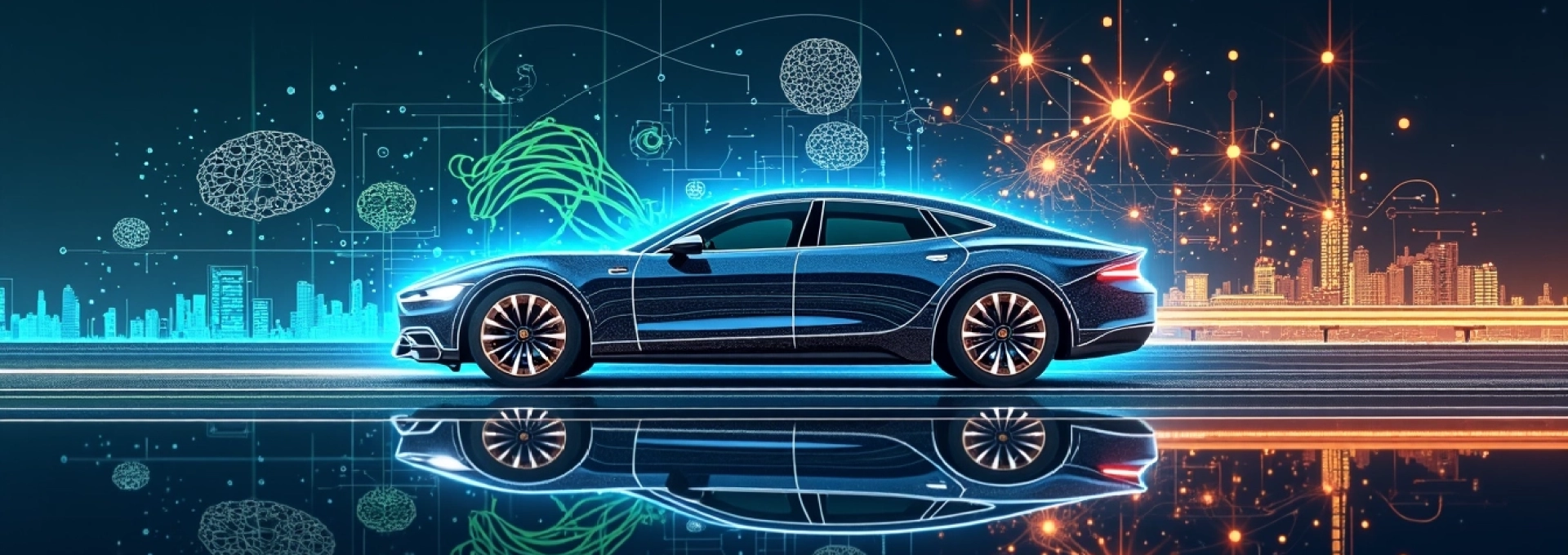
The latest advances in autonomous driving: where do we stand?
Autonomous driving technology has made significant strides in recent years, transforming the automotive industry and promising to revolutionize transportation as we know it. From advanced perception systems to sophisticated artificial intelligence algorithms, self-driving cars are rapidly evolving to navigate complex…
Lire la suite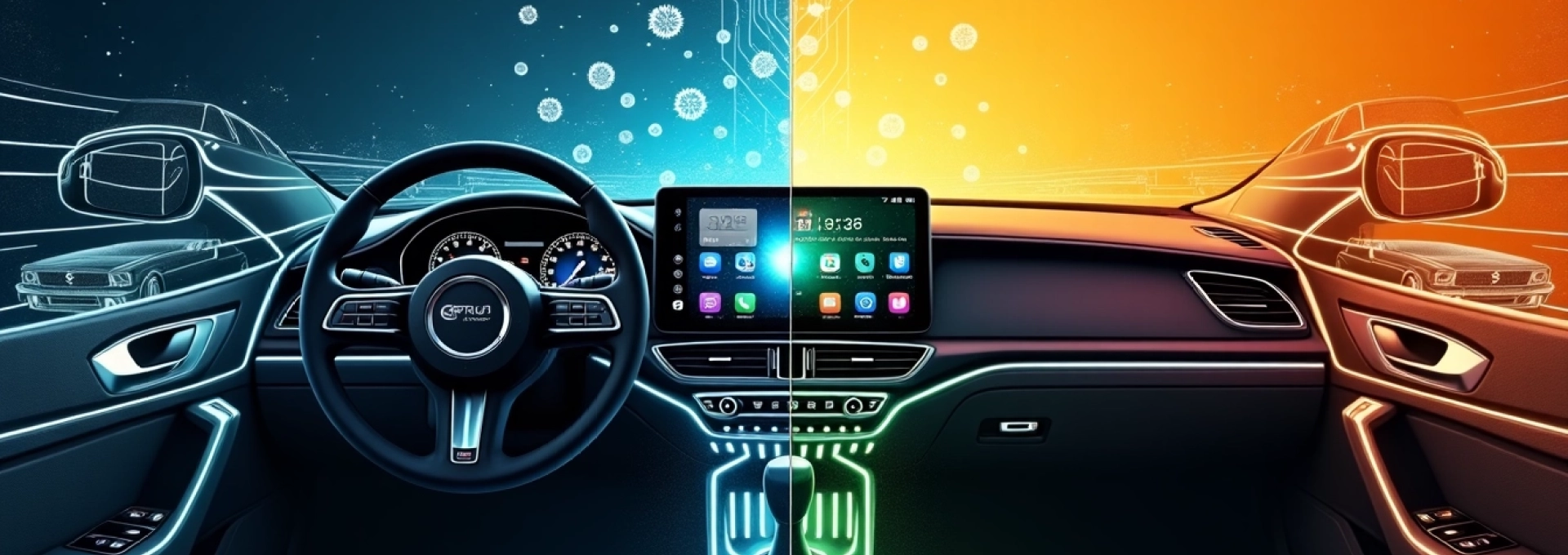
All you need to know about the new infotainment systems : apple CarPlay vs. android auto
The automotive industry is experiencing a revolution in connectivity, with infotainment systems becoming increasingly sophisticated. At the forefront of this transformation are Apple CarPlay and Android Auto, two technologies that have redefined how we interact with our vehicles. These systems…
Lire la suite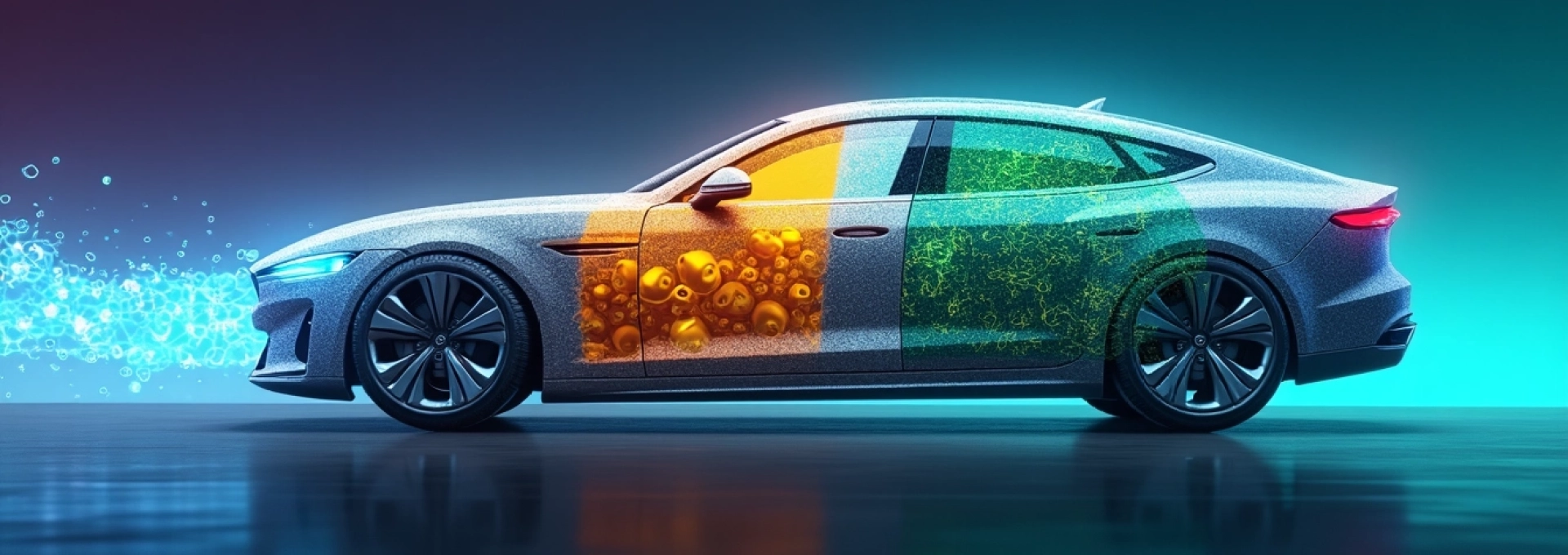
5 innovations in batteries for electric cars
The electric vehicle (EV) revolution is in full swing, with automakers and tech companies racing to develop more efficient, powerful, and affordable battery technologies. As the demand for EVs continues to grow, innovations in battery technology are crucial for overcoming…
Lire la suite