
A comfortable car does more than soften potholes. It limits the vibrations reaching occupants, supports the body without creating pressure points, controls unwanted noise and provides enough room to maintain a relaxed posture. These qualities become particularly important when everyday journeys involve damaged tarmac, speed bumps, traffic congestion and prolonged motorway driving.
The physical factors work together. A suspension system may control body movement effectively while still delivering sharp impacts through the seats. Large wheels can change how those impacts feel, while worn dampers or incorrect tire pressures may make an otherwise comfortable vehicle unpleasant. Meanwhile, cabin noise and restricted seating positions can add to the effort of a long journey.
Evaluating comfort therefore requires more than comparing specifications or taking a short drive around a dealership. The useful question is how the vehicle behaves on the roads its occupants actually travel, for the length of time they normally spend inside it.
What matters most for everyday ride comfort
- Suspension and tires: Look for controlled body movement combined with effective absorption of sharp road impacts, rather than softness or firmness alone.
- Seats and noise: Check pressure points, driving posture and cabin sound over a realistic journey, not just during the first few minutes.
- Condition and practicality: Inspect suspension wear, test different road surfaces and confirm that passengers and everyday equipment fit comfortably.
- Why Does a Firm Suspension Become Tiring on Long Commutes?
- How to Test Car Seat Comfort Before Committing to a Purchase?
- Small or Large Wheels: Which Give a Smoother Ride on Rough Tarmac?
- Common Wheel and Suspension Faults That Ruin Ride Quality
- How to Make a Noisy Cabin More Comfortable on Motorways
- How to Test a Multipurpose Car on Different Roads in One Drive?
- High Mileage or Old Age: Which Matters More for Reliability?
- How Much Interior Space Does a Car Really Need for Family Life?
Why Does a Firm Suspension Become Tiring on Long Commutes?
A firm suspension can become tiring because it transmits more road vibration and sharp impacts into the passenger compartment when its damping and spring characteristics prioritize responsiveness over isolation. Occupants must repeatedly stabilize their bodies against these movements. A setup that feels precise and engaging during a short drive may consequently prove uncomfortable over a longer commute, particularly on uneven roads.
Suspension comfort depends on two distinct characteristics: body control and body isolation. Body control describes how effectively the vehicle manages pitching, rolling and bouncing. Body isolation describes how little road disturbance reaches the occupants. Good comfort requires an appropriate balance between the two.
A tightly controlled car may remain impressively stable through corners but send abrupt jolts through its seats when crossing repairs in the asphalt. Conversely, a very soft suspension can absorb individual bumps yet leave passengers unsettled by prolonged floating or repeated body movement.
Research into occupational vibration helps explain why road conditions matter. NIOSH research on whole-body vibration in bus drivers found that exposure varied significantly with road type, with the greatest exposure occurring on routes containing speed bumps and the lowest on smooth freeways. The research concerned professional bus drivers rather than private cars, so its measurements should not be applied directly to ordinary commutes.
On a short urban trip, a driver might barely notice the need to brace against repeated impacts or adjust posture. During a commute lasting 45 minutes or longer, however, discomfort may become more apparent through restlessness, repeated position changes or difficulty maintaining a relaxed driving position. That duration is a useful testing scenario, not a scientifically established fatigue threshold.
The effects can also interact with other sources of discomfort. Persistent vibration, an awkward seat and intrusive noise may make a journey feel more demanding, although their combined impact cannot be reliably quantified without specific measurements.
The most comfortable suspension is not necessarily the softest. It is the one that absorbs the imperfections encountered every day without allowing excessive body movement. Even an effective suspension, however, cannot compensate fully for a seat that does not fit its occupant.
How to Test Car Seat Comfort Before Committing to a Purchase?
Test car seat comfort by driving for at least 20–30 minutes, checking pressure and posture at the beginning, after approximately 10 minutes and again at the end. Evaluate lumbar support, thigh contact and upper-back positioning separately. A seat that feels supportive immediately may reveal uncomfortable pressure points once the body has remained in the same position for longer.
Begin by adjusting the seat and steering wheel together. The pedals should be comfortably reachable without stretching, while the backrest should support the torso without requiring the driver to lean forward. Ensure adequate headroom, visibility and clearance around the steering wheel.
Next, assess three areas independently:
- Lumbar region: The lower back should feel supported without excessive pressure or a noticeable gap between the body and backrest.
- Thigh support: The cushion should distribute weight comfortably without pressing into the backs of the knees or forcing the legs into an awkward position.
- Shoulders and upper back: The backrest should permit a natural posture without pushing the shoulders forward or restricting movement.
Adjustable lumbar support, cushion angle and seat height can help identify whether discomfort results from the settings or the seat’s underlying shape. If a pressure point persists across sensible adjustments, adding more adjustment features may not resolve the mismatch.
Seat width and side bolsters deserve particular attention. A narrow sports seat may hold one driver securely while pressing uncomfortably against another. Equally, a broad seat might provide insufficient lateral support for a smaller occupant. Pedal position, steering-wheel reach and cushion length also determine whether a seat suits a particular body type.
A showroom assessment cannot reproduce these conditions. Display vehicles may already have their seats adjusted, while a short route on smooth roads may conceal discomfort that becomes obvious on damaged surfaces.
During the final part of the drive, notice whether you have begun shifting position, extending one leg or changing the backrest to relieve pressure. These observations are more informative than a general impression that the upholstery feels luxurious.
Passengers should conduct their own assessment, particularly when they will regularly occupy the rear seats. A comfortable driver’s position does not establish that the entire cabin is equally supportive.
Record which settings work and which pressure points remain. When comparing vehicles, this personal evidence is more valuable than adopting another driver’s seat-comfort rating. The same principle applies to the wheels and tires beneath the car: specifications matter, but the resulting experience matters more.
Small or Large Wheels: Which Give a Smoother Ride on Rough Tarmac?
Smaller wheels generally offer a smoother ride on rough tarmac when they allow taller tire sidewalls and the vehicle’s overall tire diameter remains appropriate. Taller sidewalls provide more scope for tire deformation as the wheel crosses sharp imperfections. Larger wheels fitted with low-profile tires often deliver more immediate steering response, but their shorter sidewalls can transmit harsher impacts into the cabin.
The important distinction is between wheel diameter and tire sidewall height. A tire’s aspect ratio expresses its sidewall height as a percentage of its width. Wheel diameter alone therefore cannot determine ride comfort.
For example, a smaller approved wheel combined with a taller-profile tire may provide additional impact compliance compared with a larger wheel and thinner sidewall. However, tire construction, rubber compound, load rating, inflation pressure and suspension tuning can change the outcome considerably.
Michelin‘s tyre selection and sizing advice explains the relationship between sidewall dimensions and handling characteristics, noting that lower aspect ratios generally improve cornering response while making the ride rougher. This is technical manufacturer guidance rather than an independent comparison of specific vehicles.
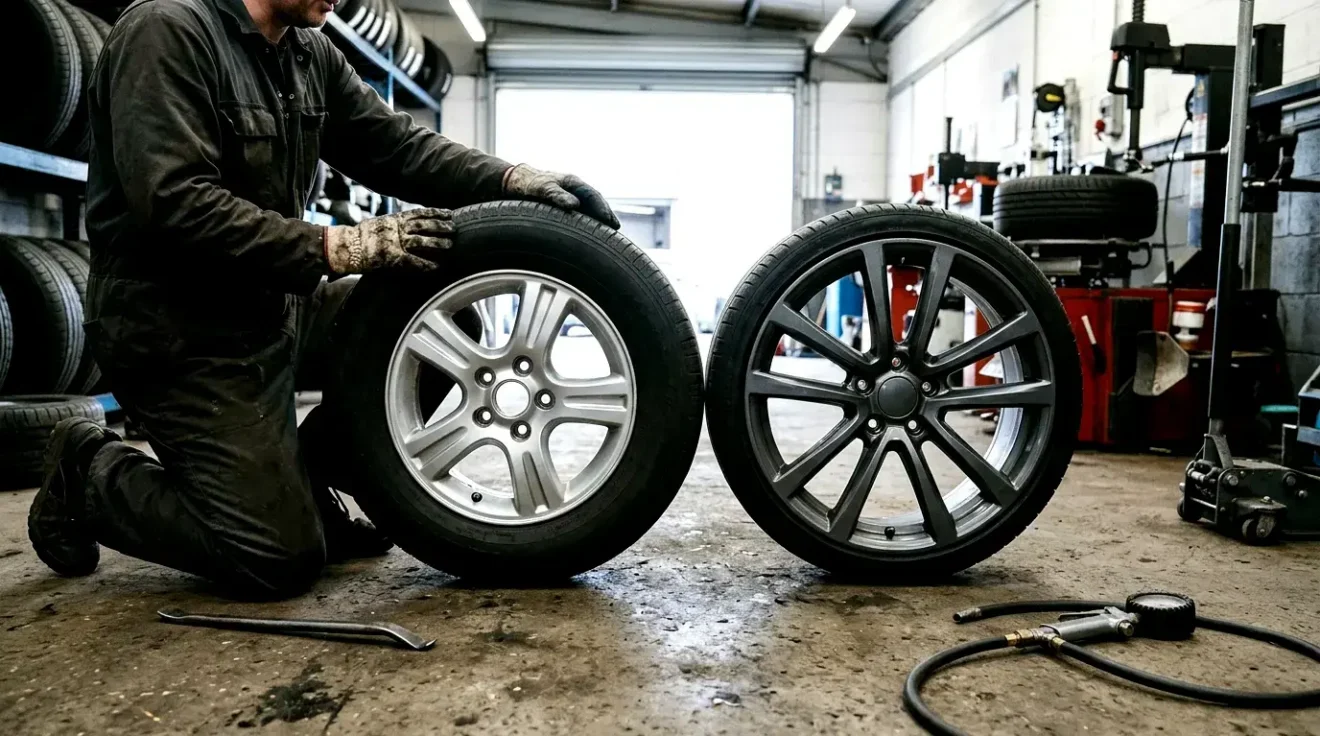
The following comparison is a practical guide to typical trade-offs, assuming compatible tire sizes and broadly comparable vehicle setups.
| Decision factor | Smaller wheel with taller sidewall | Larger wheel with lower-profile tire |
|---|---|---|
| Broken tarmac and potholes | Generally better impact cushioning | Potentially sharper impacts |
| Steering response | May feel less immediate | Often more direct |
| Speed bumps | Usually more forgiving at appropriate speeds | Can feel more abrupt |
| Replacement and damage considerations | May offer less costly replacement options | Some low-profile sizes are costly and more vulnerable to impact damage |
| Best suited to | Frequent rough roads and comfort priorities | Predominantly smooth roads and handling priorities |
Large low-profile wheel assemblies can also introduce ownership considerations. Replacement tires may be more expensive, while a severe pothole impact can damage a rim or produce a sidewall bulge. These are potential risks rather than guaranteed outcomes for every large-wheel setup.
Downsizing can sometimes improve comfort, but it is not automatically inexpensive or permissible. Any alternative must satisfy manufacturer-approved dimensions, brake clearance, load capacity, speed rating and other applicable fitment requirements. Tire pressures must also follow the vehicle manufacturer’s guidance.
Before buying a car with optional large wheels, try the smaller-wheel specification if available. The difference may be more noticeable on familiar roads than in a showroom, and tire choice should be considered alongside the condition of the suspension itself.
Common Wheel and Suspension Faults That Ruin Ride Quality
Common causes of deteriorating ride quality include worn shock absorbers, damaged or sagging springs, deteriorated suspension bushings, incorrect tire pressures and wheel-alignment problems. Symptoms vary: excessive bouncing suggests inadequate damping, a lean may indicate a spring problem, and uneven tire wear can signal inflation or geometry issues. Because several faults produce similar symptoms, diagnosis requires more than judging ride firmness.
Shock absorbers control the rate at which the suspension moves. When damping performance deteriorates, the vehicle may continue bouncing after road undulations, feel unsettled during direction changes or exhibit excessive pitching during braking. Springs support the vehicle’s weight and help determine ride height; damage or sagging can reduce suspension travel and produce harsh bottoming-out.
Suspension bushings isolate movement and help maintain component alignment. Excessive deterioration can allow unwanted movement, leading to clunks, vibration or imprecise steering. Incorrect tire pressure may make impacts harsher or handling less stable, while alignment problems can contribute to pulling and irregular tread wear.
These symptoms should be treated as inspection clues, not definitive diagnoses.
| Observed symptom | Possible cause | Appropriate next check |
|---|---|---|
| Repeated bouncing after bumps | Worn shock absorbers | Professional damper and suspension inspection |
| Uneven ride height or harsh bottoming-out | Damaged or weakened springs | Spring condition and ride-height assessment |
| Clunks over broken surfaces | Worn bushings or suspension joints | Inspection of suspension connections |
| Harshness or unsettled handling | Incorrect inflation pressure | Cold-pressure check against vehicle specifications |
| Pulling or uneven tread wear | Alignment, tire or suspension issue | Tire inspection and steering-geometry assessment |
| Steering-wheel vibration at certain speeds | Wheel imbalance or other wheel/tire fault | Wheel and tire condition and balance check |
The safety implications are important. Failed damping or excessive suspension movement can compromise wheel control and vehicle stability, especially on irregular surfaces. The exact effect on stopping distance depends on the defect, road surface and driving conditions; it should not be assumed that every suspension fault produces the same braking penalty.
The UK’s DVSA‘s official MOT inspection criteria for wheels and suspension identify significant damper failures, damaged springs and excessively worn suspension components as roadworthiness concerns. These classifications belong to the British inspection system and do not automatically apply in other countries.
For a preliminary check, park on level ground, inspect tire wear and look for obvious ride-height differences or damaged components. A gentle push-down-and-release test at a suitable bodywork location may reveal gross uncontrolled bouncing, but it cannot reliably confirm that modern dampers are healthy. Likewise, a light fluid film on a damper does not necessarily establish failure; substantial leakage deserves professional assessment.
Pressure correction and balancing are often straightforward services. Alignment may also be relatively simple when components are sound. Replacing dampers, springs or bushings involves greater mechanical work and should be considered alongside the vehicle’s overall condition.
Comfort deterioration is therefore a useful maintenance signal, but not a substitute for a professional safety inspection. Once the mechanical foundation is sound, attention can turn to another major source of commuting discomfort: cabin noise.
How to Make a Noisy Cabin More Comfortable on Motorways
Reducing motorway cabin noise starts with identifying whether the dominant sound comes from the tires and road, airflow around the body or the engine and drivetrain. Each source responds to different remedies. Correct tire pressures, sound-condition checks and healthy door seals are sensible starting points, while quieter tires and targeted insulation may help when the underlying mechanical condition is sound.
Road and tire noise often changes when the car moves from smooth asphalt to coarse, worn or textured surfaces. Tire tread patterns, construction and road texture influence the sound transmitted through the wheel arches, floor and vehicle structure.
Wind noise generally becomes more noticeable as speed increases and may originate around mirrors, window seals, door apertures or other airflow-sensitive areas. Engine and drivetrain noise, by contrast, often changes with engine speed, load or selected gear. A persistent tonal drone may indicate normal drivetrain characteristics or a mechanical problem requiring investigation.
A useful diagnosis compares sound under several conditions while maintaining safe driving practices:
- If the sound changes markedly between road surfaces at similar speeds, investigate the tires and road-noise transmission.
- If rushing or whistling increases with vehicle speed, inspect door, window and body seals for damage or poor fit.
- If a drone changes with engine revolutions or acceleration, investigate the engine and drivetrain rather than assuming the tires are responsible.
Start with basic maintenance. Check cold tire pressures, inspect tread wear and confirm that the tires match the vehicle’s approved specifications. Then look for visibly damaged or displaced seals. Unusual bearing, wheel or drivetrain noise should be inspected rather than masked with insulation.
When replacement is due, choosing a tire designed with low road-noise characteristics may make a meaningful difference, although results depend on the vehicle, surface and tire model. Compare compatible alternatives rather than relying on an isolated noise rating.
Additional sound-deadening material can reduce selected vibration paths, particularly around wheel arches and floor panels, but results vary. Poor installation may add weight, trap moisture or interfere with vehicle components. It also cannot necessarily eliminate wind turbulence or an engine drone.
Constant low-frequency sound may contribute to the perceived effort of a long journey. The effect differs between occupants and driving conditions, but reducing intrusive noise can make conversation easier and the cabin feel less demanding without changing the suspension.
The goal is not complete silence. A comfortable cabin allows occupants to hear important vehicle and traffic sounds without being overwhelmed by persistent, unnecessary noise. Testing this balance across several road types is especially valuable when choosing a car intended for different everyday roles.
How to Test a Multipurpose Car on Different Roads in One Drive?
Test a multipurpose car on a mixed route that combines urban traffic, uneven secondary roads, motorway driving and parking. Around one hour provides a practical opportunity to observe ride quality, noise, seating support and maneuverability under different conditions. Bring the passengers and everyday equipment the vehicle will normally carry, then record consistent observations rather than relying on whichever section of the drive feels most impressive.
A useful route reflects real usage. A family that spends most weekdays on damaged suburban roads should not allow an enjoyable motorway stretch to dominate the final decision. Equally, a household frequently traveling long distances needs to assess sustained noise, seat comfort and stability at appropriate cruising speeds.
The following one-hour structure is an illustrative assessment plan, not a scientifically validated testing protocol:
| Route segment | Suggested duration | What to observe |
|---|---|---|
| Urban stop-and-go | 15 minutes | Low-speed bumps, braking smoothness, visibility and pedal ergonomics |
| Uneven secondary roads | 15 minutes | Impact harshness, body movement, rattles and rear-seat comfort |
| Motorway or equivalent fast road | 20 minutes | Tire noise, wind noise, stability and sustained seat support |
| Parking and access checks | 10 minutes | Turning ease, maneuvering visibility, door access and loading convenience |
Load conditions matter because added occupants and luggage change the weight carried by the suspension. A vehicle that feels composed with only the driver aboard may respond differently when carrying several passengers and a full boot. Use a realistic load that remains within the vehicle’s permitted limits, and arrange any additional passengers or equipment with the seller in advance.
Ask rear-seat occupants for separate impressions. The suspension response, seating angle and noise level experienced in the back may differ from what the driver feels. Test child-seat installation and luggage fit while stationary, rather than trying to judge these details from memory.
Five actions for a comparable comfort test drive
- Map the normal journey: Write down the road surfaces and driving conditions encountered each week; produce a short route-priority list.
- Confirm the test configuration: Record tire size, inflation specification, passenger load and relevant seat settings; produce a vehicle setup note.
- Drive the mixed route: Include urban roads, rough surfaces, faster roads and a parking maneuver; produce a completed route record.
- Score five comfort criteria: Rate broken-road ride, motorway noise, seat comfort after 20 minutes, visibility and parking ease from 1 to 5; produce a comparison scorecard.
- Document decisive observations: Identify the strongest advantage and most significant concern for each candidate; produce a shortlist with a specific reason for accepting or rejecting each car.
Keep the scorecard consistent between vehicles. A simple five-point scale is a personal comparison tool, not an objective engineering measurement. Describe the conditions behind each score so that two similar ratings do not conceal different experiences.
Repeat the most relevant route sections when two vehicles score closely. For used cars, however, even an excellent first drive should be considered alongside mileage, age and maintenance history, because current comfort can conceal developing wear.
High Mileage or Old Age: Which Matters More for Reliability?
Neither high mileage nor old age determines reliability on its own. Mileage reflects accumulated use of mechanical systems, while age also affects materials and components that deteriorate over time. Maintenance history, operating conditions and present mechanical condition are therefore more informative than either number alone. For ride comfort, dampers, bushings, mounts and tires deserve particular attention because they can deteriorate through both use and aging.
A high-mileage car may have spent much of its life traveling steadily on motorways, while a lower-mileage vehicle may have experienced frequent short journeys, cold starts, speed bumps and stop-and-go traffic. These operating patterns place different demands on engines, transmissions, brakes and suspension components.
For example, a hypothetical car showing 100,000 miles of predominantly long-distance travel could be in better mechanical condition than another showing 50,000 miles of intensive urban use. That comparison illustrates why the odometer alone cannot establish condition; it does not guarantee that motorway use always produces superior reliability.
Age introduces other considerations. Rubber seals, suspension bushings, hoses and mounts may harden or deteriorate even when mileage remains modest. Corrosion depends heavily on climate, road treatments, storage and maintenance. Electronic faults can also arise independently of distance traveled.
For a prospective buyer, the inspection priorities should include:
- Documented servicing: Look for evidence that maintenance followed the applicable vehicle schedule and that significant repairs were recorded.
- Recent wear-item replacement: Check records for tires, brakes, dampers and relevant suspension components rather than assuming replacements have already occurred.
- Corrosion and material condition: Inspect accessible structural areas, seals and exposed components, with professional assistance where necessary.
- Steering and suspension behavior: Note clunks, pulling, abnormal bouncing, vibration and changes in ride height during a safe test drive.
Comfort-related components are particularly revealing. Deteriorated bushings can transmit vibration, while ineffective dampers may allow excessive movement over undulations. An unusually harsh or unsettled ride is therefore a reason to investigate possible deferred maintenance, although it cannot identify the required repair by itself.
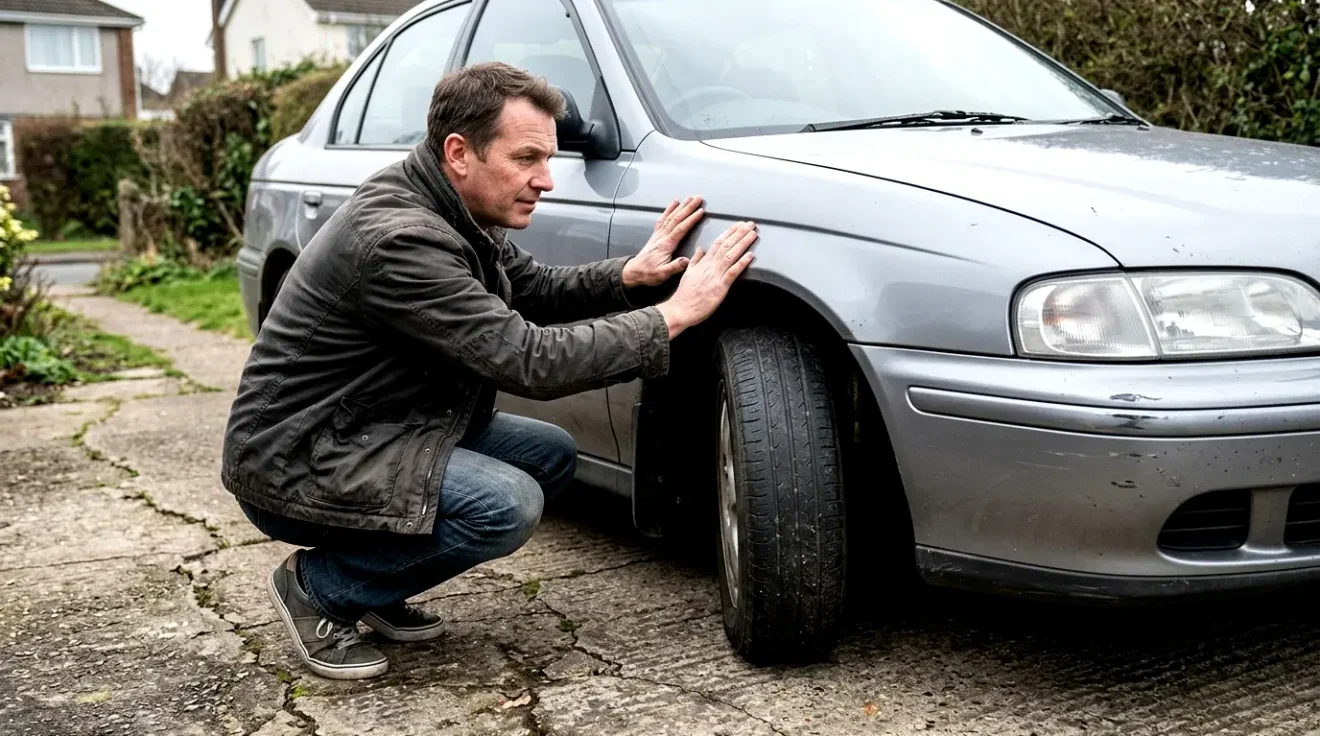
A cautious corner push-and-release check can highlight obvious uncontrolled movement, but a normal-looking response cannot rule out worn dampers. Visual tire inspection, repair records and a professional pre-purchase assessment provide stronger evidence when interpreted together.
The cost of restoring comfort also matters. Minor tire or alignment corrections may be relatively straightforward, whereas replacement suspension components can require substantial parts and labor. Obtain a condition-based repair estimate before deciding whether a particular used vehicle represents good value.
A well-maintained used car may offer excellent ride comfort, while a newer vehicle with neglected tires or suspension can disappoint. Once condition has been established, the final comfort question concerns how well the cabin accommodates the people and equipment carried every week.
Key takeaways before choosing a family car
- Test actual seating arrangements: A generous specification sheet cannot confirm that your child seats and adult passengers fit comfortably together.
- Prioritize usable volume: Boot shape, loading access and storage placement can matter more than a headline capacity figure.
- Evaluate comfort as a shared experience: Rear-seat movement, passenger posture and poorly secured luggage affect the quality of the whole journey.
How Much Interior Space Does a Car Really Need for Family Life?
A family car needs enough interior space to accommodate its regular passengers, child seats and everyday luggage simultaneously without compromising safe seating positions or convenient access. The required size depends on actual household activities rather than a universal boot-volume target. Rear-seat dimensions, luggage-compartment shape and accessible cabin storage should be assessed separately, because generous measurements in one area cannot compensate for serious limitations in another.
A practical family-space assessment begins with the configurations that occur every week. Consider whether two child seats must remain installed while another passenger uses the rear bench, whether a stroller must fit alongside shopping, or whether sports equipment regularly shares the boot with travel bags.
Test these combinations physically where possible. Published luggage capacity is useful for preliminary comparison, but the shape of the boot, wheel-arch intrusion, loading aperture and location of the parcel shelf can determine what fits.
Three types of usable space deserve separate attention:
- Rear passenger accommodation: Seat width, legroom, headroom and child-restraint compatibility determine whether occupants can travel safely and comfortably.
- Everyday boot capacity: Assess the compartment with the rear seats in their normal position, not only with seats folded to maximize advertised volume.
- Small-item storage: Door bins, accessible compartments and secure places for personal belongings reduce clutter and help prevent loose objects from moving around the cabin.
Access can matter just as much as interior dimensions. Wide-opening rear doors make child-seat installation and passenger entry easier, while an awkward door aperture can make a nominally spacious vehicle difficult to use. A high boot lip may complicate lifting heavy equipment, and inconvenient seat-folding mechanisms can discourage flexible use of the cargo area.
Space also influences perceived comfort on uneven roads. Rear passengers who cannot maintain a supported sitting position may shift repeatedly as the vehicle moves. Loose luggage can create distracting rattles, while excessive or poorly distributed loading may alter suspension response and handling. Cargo should be secured and positioned according to the vehicle manufacturer’s instructions, with permitted load and axle limits respected.
Before deciding, bring the equipment that defines everyday family use. Install the actual compatible child restraints according to their instructions, check door clearance and verify that passengers retain appropriate seating positions. Then load the stroller, bags or sports equipment together rather than checking each item individually.
Before purchasing, perform one final test with the family’s normal seating arrangement and a representative load, followed by a drive on familiar roads. Choose the vehicle that accommodates those needs without unnecessary compromises in passenger support, visibility, handling or ride comfort.
Can tire pressure make a comfortable car feel unusually harsh?
Yes. Excessive inflation pressure can reduce a tire’s ability to deform over small road imperfections and make impacts feel sharper. Underinflation can create other handling, wear and heat-related problems. Always check pressures when the tires are cold and use the vehicle manufacturer’s recommendations for the relevant load and tire specification.
Is a soft suspension always better for passengers who experience motion sickness?
No. A very soft suspension may absorb sharp impacts but allow prolonged pitching or rolling that some passengers find uncomfortable. Motion sickness is influenced by movement patterns, visual cues and individual sensitivity. A suspension that combines effective impact absorption with controlled body movement may provide a more suitable balance than softness alone.
Should ride comfort be tested from the front and rear seats?
Yes, particularly when passengers regularly use the rear seats. Seat construction, available legroom, road-noise exposure and suspension movement can produce different experiences at each seating position. Ask a passenger to evaluate the rear accommodation during a suitable test drive, then compare their observations with those from the front.
Can replacing worn tires improve ride comfort without changing the suspension?
It can. Tire construction, tread design, inflation pressure and condition influence how road disturbances and noise reach the cabin. Replacing worn, damaged or unsuitable tires with compatible models chosen for comfort may improve the driving experience. However, new tires will not correct defective shock absorbers, damaged springs or worn suspension joints.
Does a smooth test drive prove that a used car’s suspension is healthy?
No. Smooth roads may conceal deterioration that becomes apparent over bumps, during braking or on uneven surfaces. A test drive should include varied road conditions, but it cannot replace examination of the tires, dampers, springs, bushings and steering components. For a used vehicle with uncertain maintenance history, an independent mechanical inspection is a sensible additional safeguard.