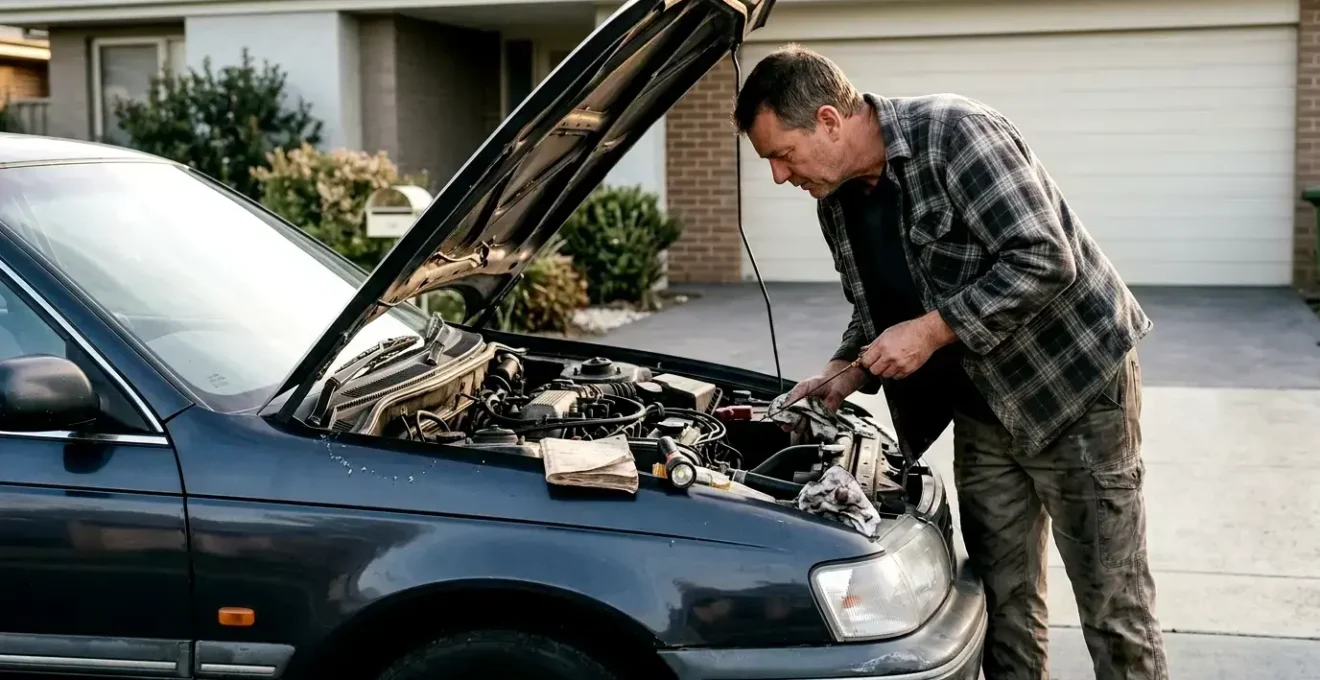
A well-maintained car can remain reliable for many years beyond the point at which its owner starts considering replacement. There is no universal mileage or age limit that determines when a vehicle becomes unreliable. Its remaining useful life depends on mechanical condition, corrosion, maintenance history, driving conditions and whether future repairs remain economically reasonable.
For owners of ageing vehicles, the objective is not to prevent every component from wearing out. It is to identify deterioration early, protect safety-critical systems and avoid spending heavily on repairs that will not meaningfully extend dependable service.
That distinction matters because a high-mileage car with documented servicing and a sound structure may be a better ownership proposition than a younger vehicle with neglected maintenance. Equally, low annual mileage offers little protection against deteriorating rubber, moisture damage or long periods of inactivity.
The most effective approach combines routine inspection, appropriate servicing, careful storage and an honest assessment of repair costs. Each decision should reflect how the vehicle is actually used and how much reliability its owner needs.
What determines how long a car stays reliable?
- Condition matters more than a single number: mileage, age and maintenance records must be assessed together.
- Preventable deterioration matters: corrosion, poor storage, neglected fluids and uneven tyre wear can turn manageable problems into expensive failures.
- Repair decisions need context: compare safety, future maintenance costs and replacement uncertainty rather than relying on the car’s market value alone.
- Why Does Rust End the Useful Life of Some Cars Early?
- How to Preserve a Car That Is Driven Only Occasionally?
- High Mileage or Old Age: Which Matters More for Reliability?
- The Storage Mistakes That Make Cars Age Faster
- When Is an Ageing Car No Longer Worth Repairing?
- How to Set Up a Monthly Car Inspection Checklist?
- How to Read Tyre Wear Patterns Before Visiting a Garage?
- How to Build a Preventive Vehicle Maintenance Routine?
Why Does Rust End the Useful Life of Some Cars Early?
Rust can end a car’s useful life when corrosion weakens structural components that support the vehicle or secure critical mechanical systems. Surface rust on a body panel is often repairable, but corrosion affecting structural members, subframes or suspension mounting points can create serious safety concerns. The location and severity of the damage matter far more than its appearance.
Corrosion develops when exposed metal reacts with oxygen and moisture. Road salt and other contaminants can accelerate this process, particularly where protective coatings have been damaged. Once corrosion penetrates a structural component, repairing it may require specialist work rather than simple cleaning and repainting.
The UK’s Driver and Vehicle Standards Agency explains in its DVSA guidance on structural integrity and corrosion that even relatively limited corrosion can make a vehicle unsafe if an important structural component loses load-bearing capacity.
This distinction prevents two expensive mistakes: scrapping an otherwise sound car because of superficial rust, and overlooking serious corrosion because the exterior still looks presentable.
| Exposure | Areas to examine | Practical prevention |
|---|---|---|
| Coastal salt air | Exposed fasteners, panel seams, underbody metal and damaged protective coatings | Rinse accumulated salt deposits and repair coating damage promptly. |
| Road-salt winters | Wheel arches, sills or rocker panels, subframes and brake-line routes | Wash accumulated road salt from accessible underbody areas when conditions allow. |
| Humid storage | Underside, enclosed cavities, floor edges and areas where moisture collects | Improve ventilation, maintain drainage and avoid persistently damp surfaces. |
A practical inspection should take place after winter or other periods of heavy exposure. Examine accessible wheel arches, lower door edges, sills, rocker panels and drainage openings with a torch. Look for bubbling paint, flaking metal, trapped debris, discoloured seams and damaged coatings. Do not crawl beneath a car supported only by a jack or probe a suspected structural area aggressively.
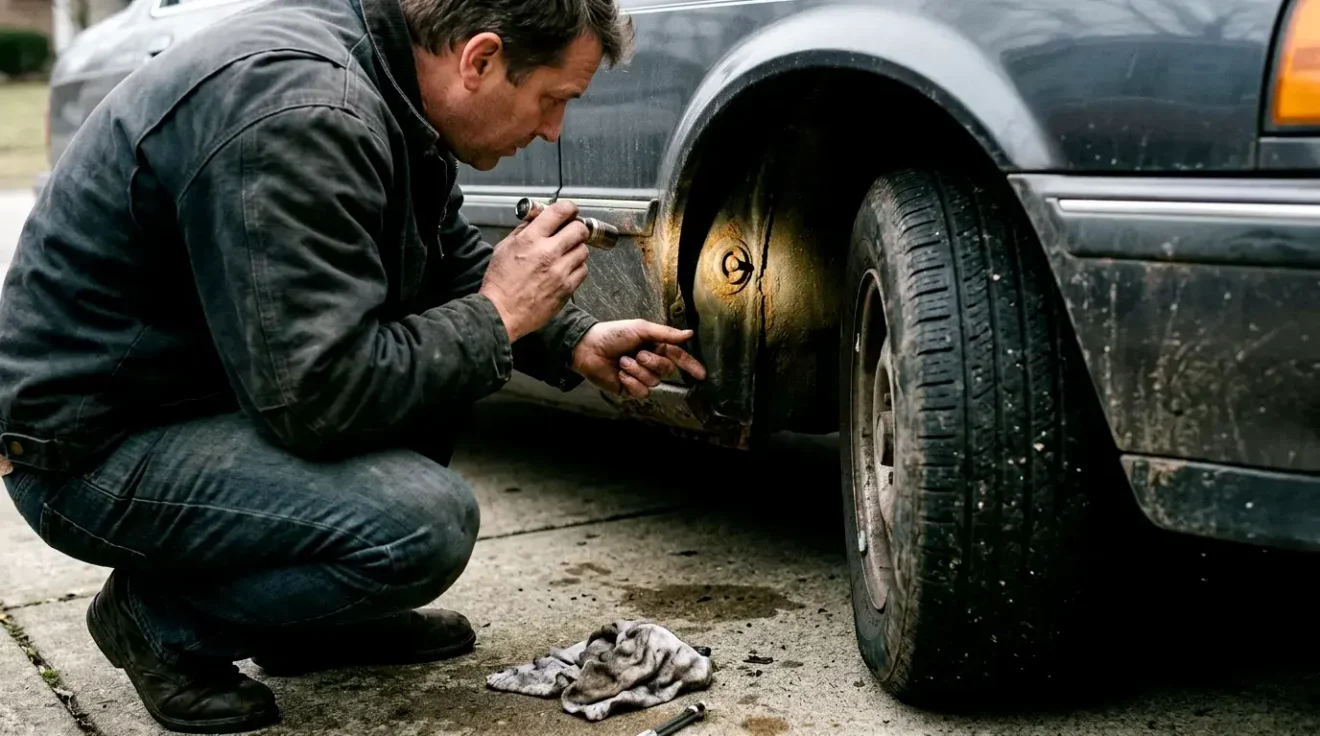
Minor corrosion on non-structural panels may justify local treatment, coating repairs or replacement of an individual panel. By contrast, rust close to suspension attachments, brake-system mountings or load-bearing members warrants professional assessment. Rust treatments should never be used to conceal weakened metal.
A modest repair can preserve years of useful service when the surrounding structure remains sound. The calculation changes when corrosion affects several critical areas, repair access is difficult or the quality of a lasting structural repair cannot be assured.
Protecting a car from rust is partly about maintaining its environment. The same principle becomes particularly important when a vehicle spends more time parked than driven.
How to Preserve a Car That Is Driven Only Occasionally?
A car driven only occasionally needs maintenance based on elapsed time, storage conditions and actual operating temperature, not just distance travelled. Regular short trips may leave the battery insufficiently charged and allow moisture to persist in the engine and exhaust. Either use the car for meaningful journeys or prepare it properly for extended storage.
Low mileage is not necessarily gentle use. Repeated cold starts concentrate wear into the warm-up period, while short journeys may end before engine oil and the exhaust system reach stable operating temperatures. Batteries can gradually discharge between journeys, and seals, tyres and brakes continue ageing even when the odometer barely changes.
When a car is kept in regular occasional use, prefer a journey long enough to reach normal operating temperature and permit meaningful battery charging. A sustained drive of roughly 30 minutes can be a useful planning example, but it is not a universal minimum: ambient temperature, engine design, electrical loads and battery condition all affect the outcome. A flat or degraded battery may require a proper charger regardless of driving time.
For longer inactivity, the preservation strategy changes. The following measures should be selected according to the owner’s manual, the storage duration and the vehicle’s equipment.
- Fuel: avoid leaving fuel indefinitely without considering its age, formulation and the manufacturer’s storage instructions. A compatible fuel stabiliser may be appropriate for some petrol vehicles, but it is not universally required or suitable.
- Tyres: maintain the specified pressure and inspect it during storage. Follow vehicle-specific instructions before using any special storage pressure or tyre supports.
- Battery: a compatible smart maintainer can reduce discharge during storage where electricity is available. Disconnecting the battery may reduce certain electrical loads but can affect alarms, memories and electronic systems.
- Seals and fluids: check for leaks, deteriorated rubber, coolant condition and scheduled fluid replacement needs before leaving the car unused.
A manufacturer’s example illustrates why storage procedures must be vehicle-specific. The Lexus long-term vehicle storage bulletin identifies stationary tyre flat-spotting as a concern and specifies periodic tyre-pressure and battery maintenance. Its particular inflation values and charging procedures are intended for the vehicles covered by that bulletin, not all cars.
Before a prolonged parking period, use a firm, dry surface, remove food and debris that could attract rodents, and consider suitable protection for accessible openings without obstructing anything that must remain ventilated. For extended storage, releasing the parking brake may reduce the risk of sticking brakes, but only when the car can be safely secured against movement using manufacturer-approved precautions.
After storage, check tyre condition, fluid levels, leaks, warning lights and evidence of rodents. Confirm that the brakes release and operate correctly before undertaking normal driving. Severe corrosion, fluid loss or unsafe braking requires inspection before road use.
A rarely used car is not automatically better preserved. Its condition reflects how the idle periods are managed, which is why calendar age deserves as much attention as mileage.
High Mileage or Old Age: Which Matters More for Reliability?
Neither high mileage nor old age independently predicts a car’s reliability. Mileage reflects accumulated use, while calendar age captures deterioration that continues even when the vehicle is stationary. Mechanical wear, environmental exposure and maintenance history interact, so a well-serviced high-mileage car may be more dependable than a younger, low-mileage vehicle with neglected systems.
Components such as wheel bearings, clutch assemblies, suspension joints and transmission parts accumulate wear through operation. Their condition depends partly on driving style, loads, road surfaces and service history.
Ageing follows a different pattern. Rubber hoses harden, seals lose flexibility, electrical connections can corrode and some fluids deteriorate with time. A car can therefore develop leaks, electrical faults or braking problems even with very little additional mileage.
To assess reliability realistically, compare three variables rather than using an arbitrary mileage cut-off.
| Factor | More reassuring evidence | Potential warning signs |
|---|---|---|
| Accumulated mileage | Wear-related maintenance documented; consistent performance and no unexplained symptoms | Persistent vibration, fluid consumption, transmission problems or neglected wear items |
| Calendar age | Sound structure, serviceable rubber components and controlled corrosion | Brittle hoses, deteriorated seals, moisture damage and recurring electrical faults |
| Maintenance history | Dated records, appropriate service intervals and evidence of completed repairs | Missing history, repeatedly deferred work or inconsistent maintenance |
Consider two hypothetical vehicles. One has covered substantial motorway mileage with regular servicing and documented repairs. The other has significantly fewer miles but has spent years making very short urban journeys and sitting unused.
The first vehicle may have greater accumulated mechanical wear, yet its operating conditions and maintenance history could make its condition easier to evaluate. The second may have more age-related or short-trip problems despite its lower mileage. Neither is automatically the safer purchase without an inspection.
Service records are particularly valuable when they show more than oil changes. Look for evidence of brake-fluid servicing, coolant maintenance, belt replacements where applicable, suspension work, corrosion treatment and resolution of recurring faults. Compare invoices with the manufacturer’s schedule, including time-based requirements.
For a high-mileage vehicle, prioritise the drivetrain, cooling system, suspension and signs of excessive mechanical wear. For an older low-mileage vehicle, add close attention to seals, tyres, brakes, electrical connections and evidence of prolonged inactivity.
When deciding whether to buy, keep or sell, use these findings to estimate future reliability rather than treating the odometer as a verdict. A professional inspection can clarify concerns that service records alone cannot resolve.
Understanding the type of ageing also reveals which preventable mistakes deserve attention. Poor storage is one of the ways owners can unintentionally accelerate deterioration.
The Storage Mistakes That Make Cars Age Faster
Poor vehicle storage can accelerate corrosion, tyre deterioration, battery discharge and brake problems even when the car is not being driven. Persistent moisture, prolonged loading on stationary tyres and inappropriate parking arrangements are especially important. Storage conditions should protect both mechanical systems and bodywork, rather than simply keeping the car out of sight.
Parking directly on grass or soil can expose the underside to persistent dampness, particularly in poorly drained locations. A firm, dry, well-drained surface is preferable for extended storage. Where outdoor parking is unavoidable, managing water accumulation and clearing vegetation around the vehicle can reduce avoidable moisture exposure.
Leaving tyres under load for long periods can produce flat spots, while gradual pressure loss increases deformation. Some temporary flat spots may diminish with normal driving, but persistent vibration, visible distortion or cracking requires professional tyre assessment.
Another mistake is leaving the parking brake engaged for a prolonged period without considering the possibility of brake components sticking. Releasing it is only appropriate when the vehicle is otherwise securely immobilised according to its manufacturer’s guidance. Chocks, transmission settings and site conditions must be considered together.
Indoor and outdoor storage: which is safer?
A garage can shield paint, plastics and rubber from direct sunlight and weather. However, an enclosed, poorly ventilated garage may trap moisture, especially if the car enters wet or the floor remains damp.
Good indoor storage therefore requires ventilation, drainage and attention to condensation. In damp environments, appropriate humidity control can be useful. Outdoor storage may provide better air circulation but introduces greater exposure to sunlight, rain, debris and changing temperatures.
Fluids also impose a time limit on storage. Brake fluid in many conventional systems absorbs moisture over time, potentially affecting corrosion resistance and braking performance. Coolant additives lose effectiveness according to formulation and service conditions, while oil can become contaminated or deteriorate depending on previous use and storage circumstances.
There is no universal requirement to replace every fluid after a fixed number of parked months. A better approach is to check its age, condition and manufacturer-specified replacement interval, then service overdue items before the car returns to regular use.
Why brief engine starts are not a substitute for driving
Starting a car for a few minutes and switching it off may create more problems than it solves. Cold operation introduces moisture and combustion by-products without necessarily allowing sufficient running time for the oil and exhaust to warm fully. It may also use more battery energy than the brief run restores.
When appropriate, a proper road journey is generally more useful than repeated short idling sessions. If the vehicle must remain stationary, follow a suitable storage maintenance procedure rather than relying on occasional starts. Never run an engine in an enclosed garage because of carbon monoxide exposure.
Some storage-related problems are inexpensive to prevent but costly to reverse. Once deterioration has progressed, the next question is whether repairing the vehicle remains worthwhile.
When Is an Ageing Car No Longer Worth Repairing?
An ageing car may no longer be worth repairing when the combined cost of immediate work, likely future failures and reliability disruption exceeds the practical value of keeping it. Market value is relevant but not decisive. Safety, repair quality, replacement costs and the owner’s dependence on the vehicle must all be considered.
A repair bill approaching a car’s resale value is not automatically irrational. Replacing the vehicle also requires money, and an affordable replacement may have unknown maintenance needs. The meaningful comparison is between the expected costs and risks of keeping the existing car and those of obtaining a suitable alternative.
A useful assessment has three parts:
- Immediate repair: obtain a written estimate, identify the failed components and establish whether the repair will address the underlying cause.
- Likely future spending: ask for an inspection of other significant concerns that could require attention over the next two years, distinguishing confirmed defects from possibilities.
- Required dependability: consider how costly and disruptive an unexpected breakdown would be for your actual travel needs.
The category of repair matters as much as its price. Essential repairs involving brakes, steering, structural integrity, the engine or transmission need a different assessment from cosmetic work or optional comfort equipment.
Spending substantially on an essential mechanical repair can be sensible when it restores dependable operation and the rest of the car is sound. However, money spent on comfort features should usually be judged against the owner’s preferences, and a repaired engine does not compensate for an unsafe, severely corroded structure.
Hypothetical example: a repair that looks expensive but may still make sense
Imagine an older car with complete service records, no significant structural corrosion and a confirmed repairable cooling-system fault. The owner receives a substantial repair estimate but finds that a suitable replacement would require additional spending and would have an uncertain maintenance history.
Keeping the existing car may be financially reasonable if a professional inspection finds no other major concerns and the repair is expected to restore reliable cooling. If the same inspection identifies serious transmission problems and widespread structural corrosion, the decision could change completely. This example is illustrative, not a documented repair outcome.
Attachment to a familiar vehicle can also have practical value. Knowing how the car has been driven and maintained reduces some uncertainty, especially when compared with an unknown used replacement. Emotional attachment becomes less useful as a decision factor when it leads to repeated spending without a credible improvement in reliability.
Warning signs that deserve particular weight include several independent major failures in a short period, professionally confirmed structural deterioration, recurring safety-related faults and declining availability of essential replacement parts.
If any defect makes the car unsafe, financial comparison should not determine whether it remains in use. It must be properly repaired or taken off the road, regardless of its sentimental value.
The strongest decisions rely on evidence accumulated before a crisis. Routine inspection records make it easier to distinguish an isolated repair from a pattern of worsening condition.
How to Set Up a Monthly Car Inspection Checklist?
A useful monthly car inspection combines a quick visual check with a slightly deeper review of tyres, fluids, lights, leaks and changes in driving behaviour. The purpose is to identify deterioration early and record it consistently. A simple dated log is more valuable than an elaborate checklist that gets abandoned.
Start with a short walk-around. Look for a visibly underinflated tyre, fresh fluid stains, new body damage, loose trim and obvious lighting problems. These observations can reveal developing issues without tools, although tyre pressure and tread depth still require proper measurement.
Once a month, check tyre pressure when the tyres are cold against the manufacturer’s specified values. Examine visible tread and sidewalls, then inspect accessible fluid levels according to the owner’s manual. Never open a pressurised cooling system while it is hot.
Check lights with assistance where necessary, including brake lights and indicators. Note unusual noises, vibrations, changes in starting behaviour and altered braking or steering feel. These symptoms should not be dismissed simply because the car remains drivable.
The real value lies in baseline comparison. A small coolant loss, repeated pressure drop in one tyre or progressively slower starting may be more informative than a single inspection result. Record what changed rather than only marking each item as complete.
Your five-step monthly vehicle inspection checklist
- Inspect the tyres: measure and record cold pressure for each tyre, plus visible sidewall defects and tread concerns. Deliverable: four pressure readings and a tyre-condition note.
- Check accessible fluid levels: follow manufacturer instructions for engine oil, coolant and other owner-serviceable reservoirs. Deliverable: dated level readings or observations and any visible leak locations.
- Verify lighting and visible body condition: check exterior lights, new paint damage, accessible corrosion and drainage areas. Deliverable: a list of functioning lights and any defects requiring attention.
- Assess starting and driving behaviour: record unusual noises, warning messages, braking changes or battery concerns. Deliverable: a brief symptom log, including when each issue occurs.
- Review and schedule action: compare observations with the previous month’s results and manufacturer maintenance requirements. Deliverable: an updated maintenance log with any inspection or repair appointments needed.
An older vehicle benefits from additional attention to rubber hoses, door seals, visible electrical connections and corrosion-prone areas. A rarely driven car may also need regular battery checks and careful assessment of brake operation after inactivity.
Keep the records in a notebook or a simple digital file. Dates, odometer readings, observations and repair outcomes are sufficient. For battery voltage, use a suitable meter only if you understand the vehicle-specific interpretation; a single voltage measurement does not establish battery health.
Over time, the log becomes an ownership decision tool. Persistent problems, repeated fluid loss or an increasing number of unrelated repairs can indicate deterioration that deserves professional evaluation.
One particularly useful part of that record is tyre condition. Tread wear can reveal developing mechanical problems before their full consequences become obvious.
How to Read Tyre Wear Patterns Before Visiting a Garage?
Tyre wear patterns can reveal possible inflation, alignment, balancing or suspension problems before the tread reaches its replacement limit. Wear concentrated on both shoulders, in the centre or along one edge provides different diagnostic clues. These patterns are warning signs rather than definitive diagnoses, so measurements should guide a professional inspection.
A tyre provides a visible record of how it contacts the road. Regular inspection is particularly valuable on older vehicles because worn steering or suspension components can contribute to abnormal tread wear, creating additional costs if the underlying cause remains unresolved.
The USTMA tire care and service guidance identifies incorrect inflation, wheel misalignment, inadequate rotation and wheel imbalance among the factors associated with abnormal tyre wear. A specific pattern cannot, by itself, prove that one particular component has failed.
Use the table to recognise common patterns and prepare more useful questions for a garage.
| Visible pattern | Possible explanation | What to request |
|---|---|---|
| Both shoulders worn faster than the centre | Prolonged underinflation is one possibility. | Pressure history and tyre-condition assessment. |
| Centre worn faster than the shoulders | Excessive inflation may contribute, depending on tyre construction and use. | Pressure verification against vehicle specifications. |
| One shoulder worn more than the other | Wheel alignment, suspension geometry or component wear may be involved. | Alignment and steering or suspension inspection. |
| Scalloped or cupped patches | Wheel imbalance, damping issues or suspension-related movement may contribute. | Wheel, tyre, suspension and damper checks. |
| Localised flat area | Previous wheel lock-up, storage-related deformation or another localised issue may be responsible. | Tyre safety assessment and investigation of the circumstances. |
To examine a tyre, park on level ground, secure the vehicle and use a suitable tread-depth gauge. Measure several principal grooves across the tread width, including the accessible inner, centre and outer zones. Repeat measurements at several positions around the circumference and record the lowest readings.
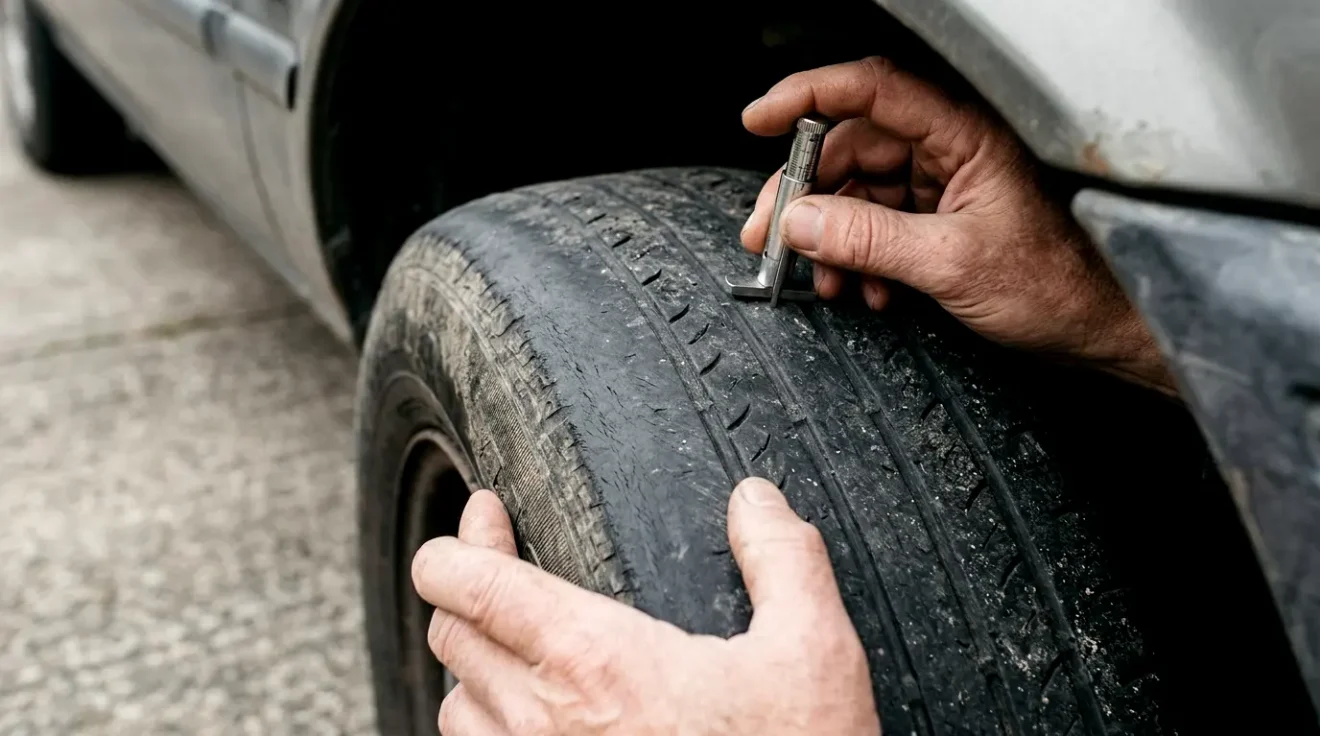
Compare the measurements across each tyre and between tyres on the same axle. Uneven depth, exposed reinforcement, cuts, bulges or persistent vibration need attention even if some tread remains. Do not attempt to judge safety only by the deepest groove or by looking at the outer shoulder.
The US National Highway Traffic Safety Administration recommends checking tyre tread at least monthly and identifies 2/32 inch, approximately 1.6 mm, as a replacement threshold in its US consumer guidance. Legal requirements vary between countries, and tyres may need replacement earlier because of damage, ageing or poor performance.
When visiting a garage, bring your measurements and explain whether the wear appeared gradually, affects one wheel or coincides with a handling change. Ask whether the likely cause should be corrected before new tyres are fitted. Replacing tyres without addressing underlying alignment or mechanical problems can allow the same abnormal wear to recur.
Early diagnosis helps protect more than tyres. It can identify faults that affect handling, braking consistency and the useful life of related suspension components.
Tyre inspection is most effective when it forms part of a maintenance system that links early detection with appropriate servicing and timely repairs.
Key takeaways before building your maintenance routine
- Prioritise maintenance according to consequences: safety-critical failures and preventable mechanical damage deserve attention before cosmetic imperfections.
- Use documented changes in condition to decide when professional inspection is needed, rather than relying only on age or mileage milestones.
- Choose a schedule that fits your actual driving and storage habits; consistency is more useful than a complicated routine that cannot be sustained.
How to Build a Preventive Vehicle Maintenance Routine?
A preventive vehicle maintenance routine should combine manufacturer service intervals, monthly condition checks and earlier intervention when symptoms develop. Time-based servicing matters even for low-mileage cars, while demanding driving conditions may require shorter intervals. The aim is to prevent avoidable failures through a manageable schedule rather than replacing components unnecessarily.
Begin with the vehicle manufacturer’s maintenance schedule. It establishes the relevant service tasks and intervals, including requirements based on elapsed time, distance and operating conditions. Use the guidance for the particular engine, model and market rather than a generic schedule found online.
Next, identify whether the vehicle experiences severe or unusual use. Frequent short journeys, stop-start traffic, towing, dusty environments and extended storage can change how quickly certain systems deteriorate. Apply the manufacturer’s appropriate service category where one is specified.
Preventive tasks deserve priority when they protect systems that would be costly or dangerous to lose:
- Engine oil and filters: follow time and distance limits, taking account of short-trip operation and the approved oil specification.
- Brake fluid: replace according to manufacturer requirements and investigate changes in braking feel, leaks or contamination.
- Coolant: maintain the correct formulation, concentration and replacement schedule to protect against overheating and internal corrosion.
- Belts and hoses: inspect for cracking, contamination, leaks and deterioration; replace scheduled components when required.
- Battery and charging system: monitor starting performance, corrosion at accessible terminals and the effects of prolonged inactivity.
Maintenance needs to operate at three complementary levels. The monthly inspection establishes whether the vehicle is changing. Tyre measurements and other targeted checks help identify potential causes. Scheduled servicing then addresses components and fluids before predictable deterioration creates larger problems.
| Maintenance layer | Suggested cadence | Main purpose |
|---|---|---|
| Quick condition check | Before demanding journeys and whenever a new symptom appears | Identify obvious safety concerns, leaks or unexpected changes. |
| Monthly inspection | Once each month, including periods of limited use | Track tyre pressures, fluid levels, visible deterioration and developing symptoms. |
| Scheduled service | At manufacturer-specified time or mileage intervals, adjusted for applicable operating conditions | Maintain fluids, inspect critical systems and replace scheduled wear components. |
| Targeted professional assessment | Whenever concerning symptoms or inspection findings justify it | Diagnose faults that cannot be reliably assessed through owner checks. |
The monthly inspection should remain simple enough to complete consistently. Keep one dated maintenance record containing odometer readings, services performed, inspection findings, repairs and upcoming tasks. A phone calendar reminder, notebook or basic spreadsheet is sufficient.
For an ageing vehicle, review the record periodically for patterns. Repeated coolant loss, increasingly frequent electrical problems or recurring suspension faults may change the maintenance plan and eventually influence the repair-versus-replacement decision.
A good routine also avoids unnecessary work. Replacing serviceable parts without evidence of wear or a scheduled requirement can increase ownership costs without delivering meaningful reliability benefits. Conversely, postponing a safety-critical repair is not a legitimate saving.
Start with the next monthly inspection: record the vehicle’s current condition, identify overdue manufacturer-specified services and arrange professional assessment of any significant concerns. Repeat the process consistently, adjusting it as the car ages. The goal is not to keep a vehicle forever, but to preserve safe, dependable and financially sensible transport for as long as its condition allows.
Can a car remain reliable after 200,000 miles?
Yes. A car can remain reliable beyond 200,000 miles (approximately 322,000 km), but that distance does not guarantee reliability or establish a universal expected lifespan. Maintenance records, structural condition, drivetrain health and the cost of foreseeable repairs are more useful than mileage alone. A comprehensive inspection is particularly valuable when planning continued ownership at substantial mileage.
Is it better to repair an old car or buy a newer used car?
Compare the current repair estimate, probable additional work, vehicle safety and expected reliability with the full cost and uncertainty of a replacement. A known, structurally sound car may justify a major repair. Replacement becomes more attractive when serious independent faults repeatedly occur, essential components are unavailable or a lasting safe repair is no longer practical.
Does a car need servicing every year if it is barely driven?
Some maintenance tasks remain due according to elapsed time, even when mileage is very low. However, annual servicing is not a universal rule for every component or vehicle. Follow the manufacturer’s time-based schedule and consider additional checks for battery condition, moisture, corrosion, tyres and brakes when the car spends extended periods parked.
Should an older car be driven every week to keep it healthy?
Weekly driving can be convenient, but no universal weekly requirement applies to all vehicles. The important distinction is between useful journeys that allow systems to reach appropriate operating conditions and repeated brief starts that may not provide the same benefits. For extended inactivity, follow vehicle-specific storage and battery maintenance instructions instead of starting the engine solely to idle.
What are the strongest warning signs that an older car is becoming unreliable?
Repeated independent breakdowns, unexplained fluid loss, overheating, worsening transmission behaviour, persistent starting problems and significant structural corrosion all warrant attention. Changes in braking or steering are particularly important safety concerns. A rising repair frequency is more informative when documented over time and assessed alongside the seriousness, cost and repairability of each fault.